Blog Article
How Hawaii's Salt Air Destroys Your Cabinets — And What Actually Protects Them
Living near the ocean in Hawaii comes with extraordinary benefits — and one persistent maintenance challenge that most homeowners underestimate until they start seeing the damage: salt air corrosion.
Living near the ocean in Hawaii comes with extraordinary benefits — and one persistent maintenance challenge that most homeowners underestimate until they start seeing the damage: salt air corrosion.
The salty, moisture-laden air that makes Hawaii feel so alive also accelerates the degradation of virtually every organic and metal surface in your home. Nowhere is this more visible — and more costly — than your kitchen cabinets, bathroom vanities, and interior doors.
This article explains the mechanism of salt air damage, how quickly it occurs in different Oahu locations, which materials are most vulnerable, and what actually works to protect surfaces long-term.
If you live near the shoreline, cabinet protection is not optional maintenance. It is part of the lifecycle cost of the home.
How Salt Air Damages Cabinets
Salt air damage operates through several simultaneous mechanisms:
Osmotic Moisture Penetration
Salt is hygroscopic — it actively attracts and retains moisture from the surrounding air. When salt particles settle on and into porous surfaces like wood, MDF and particle board, they act as moisture magnets, drawing water vapor into the material even when the ambient humidity is moderate. This is why cabinets in coastal Hawaii homes can feel damp and begin to swell even when there is no direct water contact.
Chemical Corrosion of Surface Finishes
Salt spray (sodium chloride) reacts with the binders and polymers in conventional cabinet finishes over time. Lacquer, water-based paint and even solvent-based paint develop micro-cracks and pinholes as the salt disrupts the film's molecular structure. Once these micro-cracks form, moisture has a pathway into the substrate and the damage accelerates rapidly.
Metal Hardware Oxidation
Cabinet hinges, handles, pulls and drawer slides made from standard steel or zinc alloy begin to corrode in salt-air environments within 12–24 months. The corrosion spreads to surrounding wood surfaces, staining the cabinet material around hardware mounting points.
Delamination
Thermofoil laminate cabinets — common in Hawaii homes built in the 1990s and 2000s — are particularly vulnerable. The adhesive bond between the laminate and the MDF substrate weakens in salt-air and humidity conditions. Delamination typically starts at the edges and corners of cabinet doors and progresses inward. Once started, it cannot be reversed without replacing the door entirely.
How Quickly Does Salt Air Damage Occur?
The rate of damage depends on proximity to the ocean and prevailing wind direction:
- Within 100 meters of the shoreline: visible surface degradation often begins within 2–5 years on unprotected cabinets. Thermofoil delamination within 3–7 years.
- 100 to 500 meters from the coast: medium rate of damage. Standard cabinets typically show significant wear in 7–12 years.
- Inland but in the path of trade winds carrying ocean air: slower degradation, but still meaningfully accelerated compared to non-coastal environments.
In Hawaii Kai, Kailua, the North Shore, and waterfront Honolulu properties, these timelines are commonly observed and contractors frequently replace cabinets that have corroded well before their structural life should have ended.
Which Materials Are Most Vulnerable?
- Thermofoil laminate on MDF: most vulnerable — delamination is rapid in salt-air
- Painted MDF: vulnerable once paint develops micro-cracks or edge chips
- Painted particle board: highly vulnerable — particle board absorbs moisture aggressively
- Painted solid wood: moderately vulnerable — more durable substrate but still susceptible to surface paint failure
- Melamine laminate: moderate resistance but edges are vulnerable
- Bare or stained wood: highly vulnerable without proper sealing
What Actually Protects Cabinets from Salt Air
Given that most cabinet materials in Hawaii homes are inherently vulnerable, the question is what actually works for long-term protection.
Option 1: Marine-Grade Coatings
Two-part polyurethane or epoxy coatings (similar to those used on boats) provide excellent salt-air resistance when properly applied. The challenge is that application requires full cabinet face sanding, priming and multiple coating passes with a professional spray setup. The cost is significant, the disruption is considerable, and the result needs re-coating every 7–10 years.
Option 2: Architectural Film Encapsulation
Physical encapsulation with professional architectural film is the most practical and cost-effective salt-air protection solution for most Hawaii homeowners. Here's why it works:
- Chemically inert surface: the Polymeric PVC film itself is not degraded by salt.
- Salt-spray resistant adhesive: the German Jowat Acrylic PSA bond does not delaminate in coastal conditions.
- Physical barrier: sealed application prevents salt air from reaching the substrate beneath.
- Waterproof surface: trapped salt cannot pull moisture into the cabinet through the film barrier.
- Edge sealing: removes the entry point salt typically exploits on conventional laminate.
The result is a cabinet surface that is functionally isolated from the salt-air environment, protected by a material that the salt has no mechanism to degrade.
For Yacht Owners Specifically
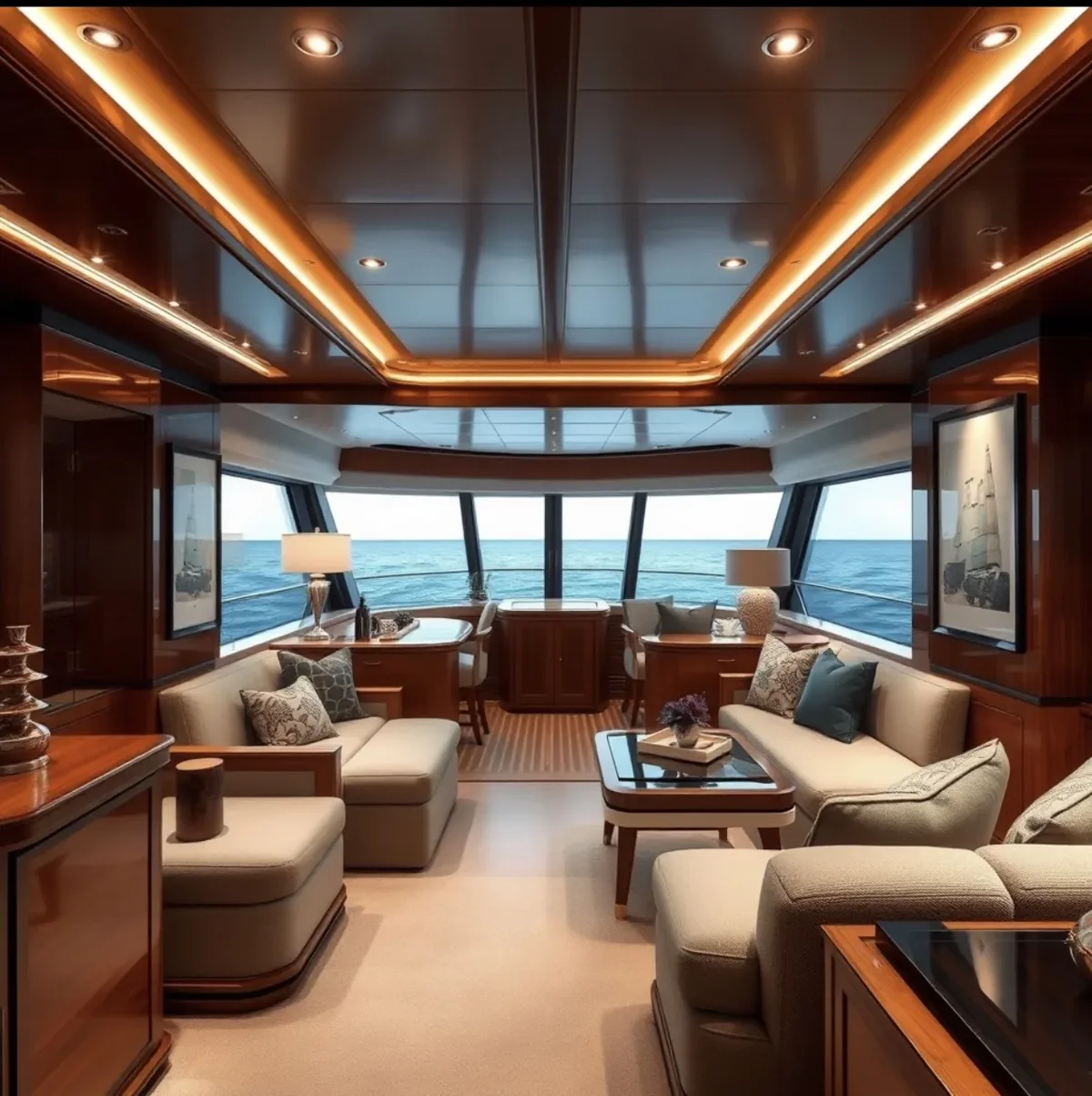
The same logic applies to yacht and boat interior panels, where the salt-air exposure is significantly more intense than even the most exposed coastal home. Our Corrosion-Proof architectural film specification — with marine-grade adhesive testing — is specifically validated for vessel interior applications. It is one of the most cost-effective ways to protect and refresh yacht interior woodwork, particularly in Oahu's marina environments where boats are in constant proximity to salt water.
The Long-Term Economics
Cabinet replacement in a coastal Hawaii home every 8–12 years due to salt-air damage costs $12,000–$30,000 per replacement cycle. A protective film wrap at $500–$2,500 that extends the cabinet life by 7–12 years, and then another film refresh at the same cost, means the total 20-year spend is under $5,000 — compared to potentially $30,000+ for two replacement cycles.
The economics strongly favor proactive encapsulation, particularly for properties within 500 meters of the ocean.
Ready to Refresh Your Space?
Talk Through Your Project With Hawaii Film & Wrap.
We serve all of Oahu with fast quote turnaround for kitchens, rentals, commercial spaces, and marine interiors.