Blog Article
Why Hawaii Homes Get Mold on Cabinets — And How to Stop It
If you have lived in Hawaii for more than a few years, you have probably encountered mold somewhere in your home. On window sills. In the bathroom. In the corner of the pantry. But one of the most common — and most overlooked — places mold establishes itself in Hawaii homes is inside and on the back of kitchen cabinets.
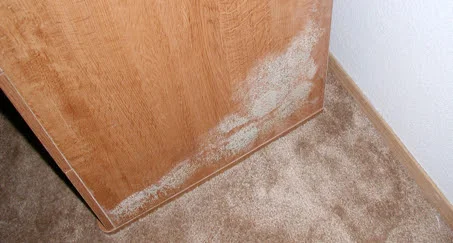
If you have lived in Hawaii for more than a few years, you have probably encountered mold somewhere in your home. On window sills. In the bathroom. In the corner of the pantry. But one of the most common — and most overlooked — places mold establishes itself in Hawaii homes is inside and on the back of kitchen cabinets.
This article explains why Hawaii's climate creates such ideal conditions for cabinet mold, what the risks are, and most importantly, what you can do to stop it — including a solution that most Hawaii homeowners don't know exists.
Why Hawaii's Climate Creates Perfect Mold Conditions
Mold needs three things to grow: organic material to feed on, moisture, and warmth. Hawaii provides all three in abundance.
High Ambient Humidity
Hawaii's average relative humidity ranges from 60% to 80%, depending on the neighborhood, time of year and microclimate. Some areas — Manoa, Nuuanu, Kaneohe, the windward side of the island — routinely see humidity above 70% for weeks at a time. At these levels, organic surfaces that aren't actively dried or sealed will eventually support mold growth.
Poor Air Circulation in Cabinet Interiors
Kitchen cabinets — particularly base cabinets under the sink and near the dishwasher — have poor air circulation and experience regular moisture exposure from plumbing condensation, steam from cooking and occasional water splash. The combination of trapped humidity and organic wood or particle board is exactly what mold needs.
Organic Materials
Standard kitchen cabinets — even those with laminate fronts — are constructed from particle board, MDF or plywood. These materials are organic and highly porous. Once the laminate surface ages, chips or delaminates (common in Hawaii's heat and humidity), the organic core beneath is exposed directly to moisture. Mold colonizes quickly.
The Risks of Cabinet Mold
Cabinet mold is more than an aesthetic problem:
- Health implications: mold spores circulate through the air in your home. For asthma sufferers, people with allergies, children and elderly residents, elevated indoor mold levels cause real health impacts.
- Structural damage: unchecked mold in cabinet interiors eventually degrades the particle board or MDF core, causing swelling, softening and structural failure. Cabinet replacement becomes necessary.
- Property value: buyers conducting home inspections in Hawaii routinely find cabinet mold, and it can be a deal-breaker or a significant negotiating point. For Airbnb hosts, mold-related complaints are among the most damaging review scenarios possible.
- Smell: Active mold in cabinets produces a musty odor that permeates the kitchen and is difficult to eliminate without addressing the source.
The Common (Ineffective) Responses
Most Hawaii homeowners who discover cabinet mold respond with one of the following, none of which solve the underlying problem:
- Bleach cleaning: Removes visible mold temporarily but does not address the porosity of the substrate. Mold returns within weeks.
- Better ventilation: Helpful, but rarely sufficient given Hawaii's ambient humidity levels.
- Replacing the affected cabinets: Addresses the immediate problem but leaves the same vulnerable organic materials in place for the next mold cycle.
- Mold-resistant paint: Offers limited protection and typically only on the painted surface, not the interior substrate.
The Permanent Solution: Physical Encapsulation
The most effective long-term solution to cabinet mold in Hawaii is physical encapsulation — creating an inorganic, non-porous barrier that seals the organic wood substrate completely from air and moisture.
This is precisely what professional architectural film wrapping achieves. When properly applied:
- The Polymeric PVC film is inorganic and non-porous. Mold cannot colonize the film surface because there is no organic material for it to feed on.
- The sealed edges create a complete moisture barrier. Water and humid air cannot penetrate to reach the wood or particle board beneath.
- The German Jowat Acrylic PSA adhesive maintains its bond in high-humidity conditions, so the seal does not break down over time.
- Cabinet interiors can also be wrapped — particularly the base cabinet surfaces near the sink and under the dishwasher, which are the highest-risk areas.
- Unlike painting or laminating (both of which leave micro-pores and edge gaps), properly applied architectural film creates a complete physical seal. The organic substrate is preserved beneath it — not degraded — and the mold has no pathway to establish.
Treating Existing Mold Before Wrapping
- If your cabinets already have mold present, the mold must be treated before film is applied. The treatment process involves:
- Clean all visible mold with a professional mold-killing solution (not just bleach — enzyme-based mold cleaners are more effective on porous wood surfaces).
- Allow the surface to dry completely — typically 24–48 hours in Hawaii conditions. A dehumidifier in the cabinet space accelerates this.
- Apply an anti-mold primer to the cleaned surfaces before film application. This provides a chemical barrier in addition to the physical barrier that the film creates.
- Apply film to all interior and exterior cabinet surfaces, paying particular attention to sealing all edges.
When done correctly, this approach permanently resolves the mold problem for the life of the film — typically 7–12 years.
Prevention for New or Clean Cabinets
If your cabinets are currently mold-free, wrapping them now is the best prevention strategy. The cost of a preventive cabinet wrap is dramatically lower than the cost of addressing structural cabinet damage caused by years of unchecked mold.
We particularly recommend interior cabinet wrapping — an often-overlooked service — for:
- Base cabinets under the kitchen sink
- Cabinets adjacent to the dishwasher
- Any cabinets in bathrooms, laundry rooms, or areas with frequent moisture exposure
- Cabinets in older Hawaii homes where the original laminate is aging and developing edge chips or bubbling
Conclusion
Cabinet mold in Hawaii is a predictable consequence of the climate — not a personal failing. The organic materials in standard cabinets, combined with Hawaii's ambient humidity, make mold colonization almost inevitable without intervention.
Physical encapsulation with professional architectural film is the most durable, cost-effective solution available. It eliminates the conditions mold needs to grow, preserves the structural integrity of the cabinets beneath, and delivers a visual transformation as a bonus.
Ready to Refresh Your Space?
Talk Through Your Project With Hawaii Film & Wrap.
We serve all of Oahu with fast quote turnaround for kitchens, rentals, commercial spaces, and marine interiors.