Blog Article
Cabinet Wrap vs. Cabinet Refacing in Hawaii: Cost, Time & Results
If your kitchen cabinets are looking tired but the boxes are still solid, you have two main options short of a full replacement: cabinet refacing or cabinet wrapping with architectural film. Both can transform the look of your kitchen dramatically. But they are very different in terms of cost, process, timeline and long-term performance — especially in Hawaii's unique climate.
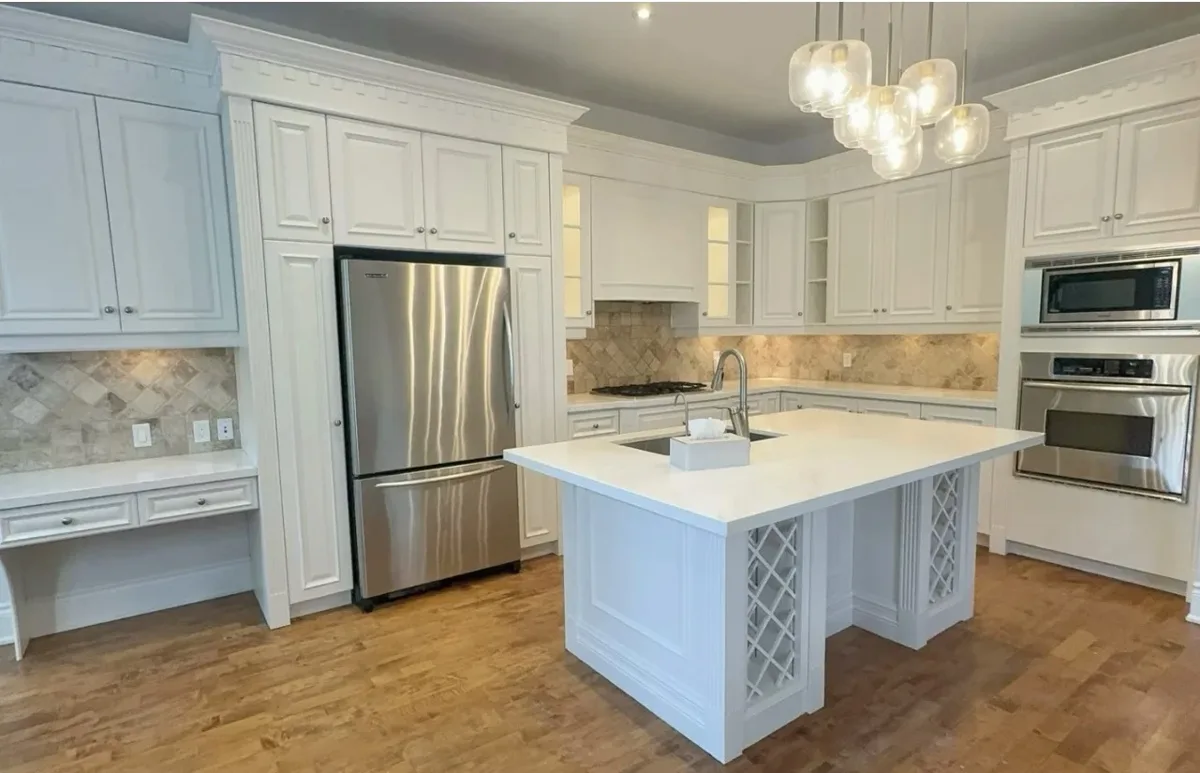
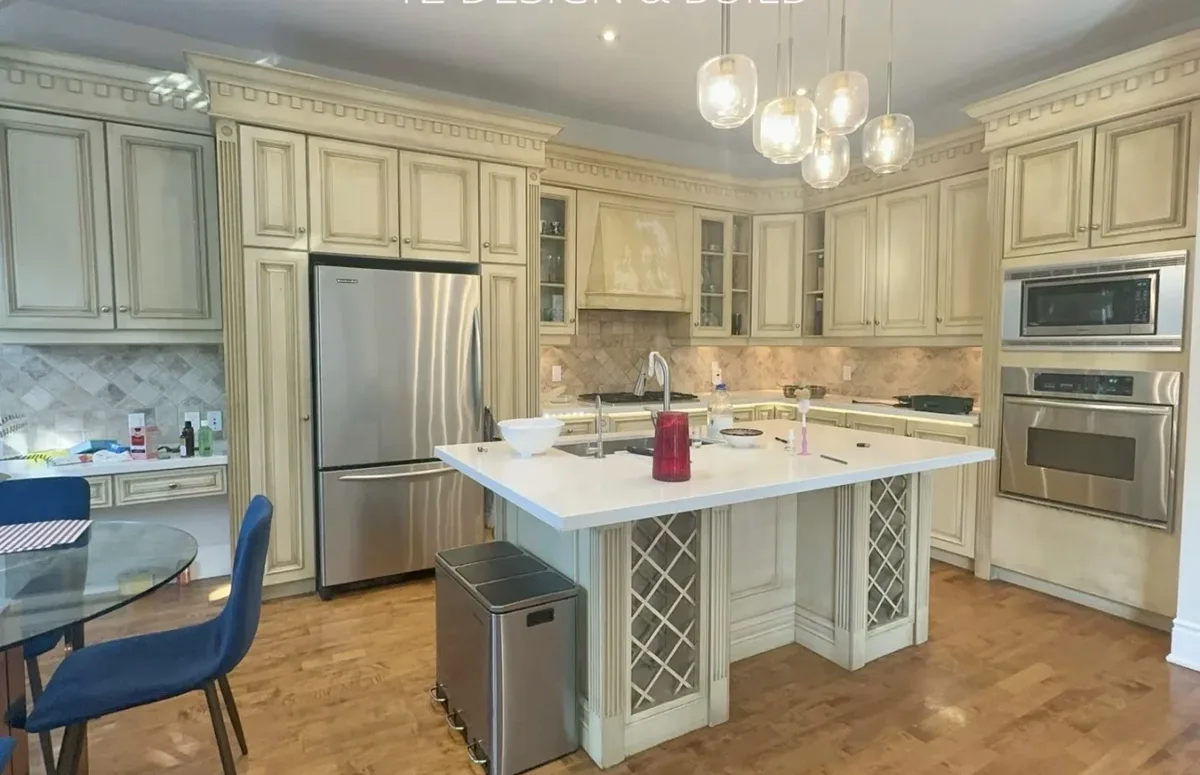
BEFORE
AFTER
If your kitchen cabinets are looking tired but the boxes are still solid, you have two main options short of a full replacement: cabinet refacing or cabinet wrapping with architectural film. Both can transform the look of your kitchen dramatically. But they are very different in terms of cost, process, timeline and long-term performance — especially in Hawaii's unique climate.
This guide gives you a straight comparison so you can make the right decision for your home and your budget.
What Is Cabinet Refacing?
Cabinet refacing involves removing the existing cabinet doors and drawer fronts and replacing them with new ones, while applying a veneer or laminate skin to the cabinet boxes (the frames that stay in place). It's a middle-ground renovation — less invasive than full replacement, but more involved than surface-only work.
In Hawaii, cabinet refacing typically costs between $3,500 and $12,000 for a standard kitchen, depending on the number of doors, the material chosen, and the contractor's rates. The process generally takes 3 to 7 days and usually requires a contractor with carpentry skills.
What Is Cabinet Wrapping with Architectural Film?
Cabinet wrapping applies a professional-grade architectural vinyl film directly over the existing cabinet surfaces — doors, drawer fronts, side panels and frames. The film bonds to the existing material using a pressure-sensitive adhesive, and the deep embossed texture of quality films replicates wood grain, stone and matte finishes with authentic tactile feel.
In Hawaii, cabinet wrapping with Hawaii Film & Wrap starts from $500 for a small kitchen and ranges up to approximately $2,200 for a large kitchen. Most projects complete in 1 to 2 days.
Cost Comparison
Here is a direct comparison for a typical medium-sized Hawaii kitchen with 15 cabinet doors:
- Cabinet wrapping with architectural film: approximately $500–$1,600
- Cabinet refacing (veneer/laminate): approximately $5,000–$9,000
- Full cabinet replacement: approximately $12,000–$25,000+
Film wrapping is typically 70–80% less expensive than refacing, and represents a saving of 85–90% compared to full replacement.
Timeline Comparison
For a Hawaii homeowner or Airbnb host, time is money. Here is how the timelines compare:
- Cabinet wrapping: 1–2 days. No drying time, no curing wait. Kitchen usable the same evening.
- Cabinet refacing: 3–7 days. New doors must be ordered (lead time 1–3 weeks in Hawaii), then installed. Some adhesive curing time required.
- Full replacement: 3–8 weeks. Demolition, ordering, delivery delays (everything ships to Hawaii), installation.
For Airbnb and vacation rental owners, a 1–2 day project means losing one booking window rather than several weeks of revenue.
Durability in Hawaii's Climate
Hawaii presents specific challenges that matter when evaluating surface finishes: high UV exposure, tropical humidity averaging 63–70% relative humidity, salt air corrosion near the coast, and the potential for mold in enclosed cabinet spaces.
Here is how the two options compare:
Cabinet Refacing
Quality cabinet refacing using rigid thermofoil or real wood veneer can be durable if properly installed. However, thermofoil is notoriously vulnerable to Hawaii's heat and humidity — it tends to peel at edges, particularly around dishwashers and sinks, within 5–10 years. Real wood veneer performs better but is significantly more expensive and still requires finishing that can yellow in UV exposure.
Architectural Film Wrapping
Quality architectural film (our Pacific brand specification) is engineered for these conditions. The 100% waterproof Polymeric PVC base is physically sealed — no peeling at edges in humidity. Our UV-Resistant series carries a ≥5-year no-yellowing specification. The film is mold-proof (non-porous surface seals the wood substrate) and corrosion-proof against salt-air environments. For Hawaii specifically, film wrapping holds up comparably or better than thermofoil refacing at a fraction of the cost.
Design Options
- Cabinet refacing: limited to the door styles and finishes offered by the refacing supplier. Typically 20–60 options.
- Architectural film wrapping: 200+ finishes across wood grain, stone, marble, matte solid color, metallic and fabric textures. Any surface can be matched.
Film wrapping also allows more complete coverage — including side panels, internal edges, toe kicks and any exposed cabinet frames — creating a more uniform, cohesive result.
Reversibility
One frequently overlooked factor: what happens later if you want to change the look again?
Cabinet refacing is permanent. The new veneer and doors become the cabinet — reversing it means replacement.
Film wrapping is removable. Quality film with solvent-based adhesive (like our German Jowat Acrylic PSA) can be removed cleanly from most surfaces without leaving residue, leaving the original cabinet intact. This is valuable for rental properties and for homeowners who may want to change the look again in 5–7 years.
Which Should You Choose?
The honest answer depends on your situation:
- Choose cabinet wrapping if: you want the fastest result, lowest cost, and need to stay in the house during the project. Ideal for Airbnb hosts, investment properties, pre-sale refreshes, and anyone who values flexibility.
- Choose cabinet refacing if: you want to change the door profile (shape/style) entirely, have a larger budget, and are planning to stay in the home long-term with no need to reverse the work.
In most Hawaii scenarios — particularly for Airbnb owners, pre-sale renovations, and budget-conscious homeowners — cabinet wrapping with professional architectural film delivers the better return on investment.
Conclusion
Cabinet wrapping costs 70%-80% less than refacing, completes in a fraction of a time, requires no lead time for ordering, and performs comparably in Hawaii's climate when using quality Polymeric PVC film. For most Oahu homeowners and rental property owners, it is simply the smarter choice.
Ready to Refresh Your Space?
Talk Through Your Project With Hawaii Film & Wrap.
We serve all of Oahu with fast quote turnaround for kitchens, rentals, commercial spaces, and marine interiors.