Blog Article
The Complete Guide to Architectural Film Wrapping in Hawaii
If you've been researching ways to refresh your kitchen, bathroom, commercial space or yacht interior in Hawaii without the cost and disruption of a full renovation, architectural film wrapping is almost certainly part of the answer.
If you've been researching ways to refresh your kitchen, bathroom, commercial space or yacht interior in Hawaii without the cost and disruption of a full renovation, architectural film wrapping is almost certainly part of the answer.
This guide covers everything you need to know: what architectural film is, what surfaces it can transform, how it performs in Hawaii's specific environment, how much it costs on Oahu, how long it lasts, and how to choose a qualified installer. By the end, you'll know whether it's the right solution for your property.
Use this guide as the Hawaii-specific version of the answer: not just what architectural film is, but how it behaves under local UV, humidity, and salt-air conditions.
What Is Architectural Film Wrapping?
Architectural film — also called interior vinyl film, surface wrap film or décor film — is a professional-grade, self-adhesive material applied directly over existing surfaces. Think of it as a high-performance design skin for your cabinets, walls, doors, furniture and more.
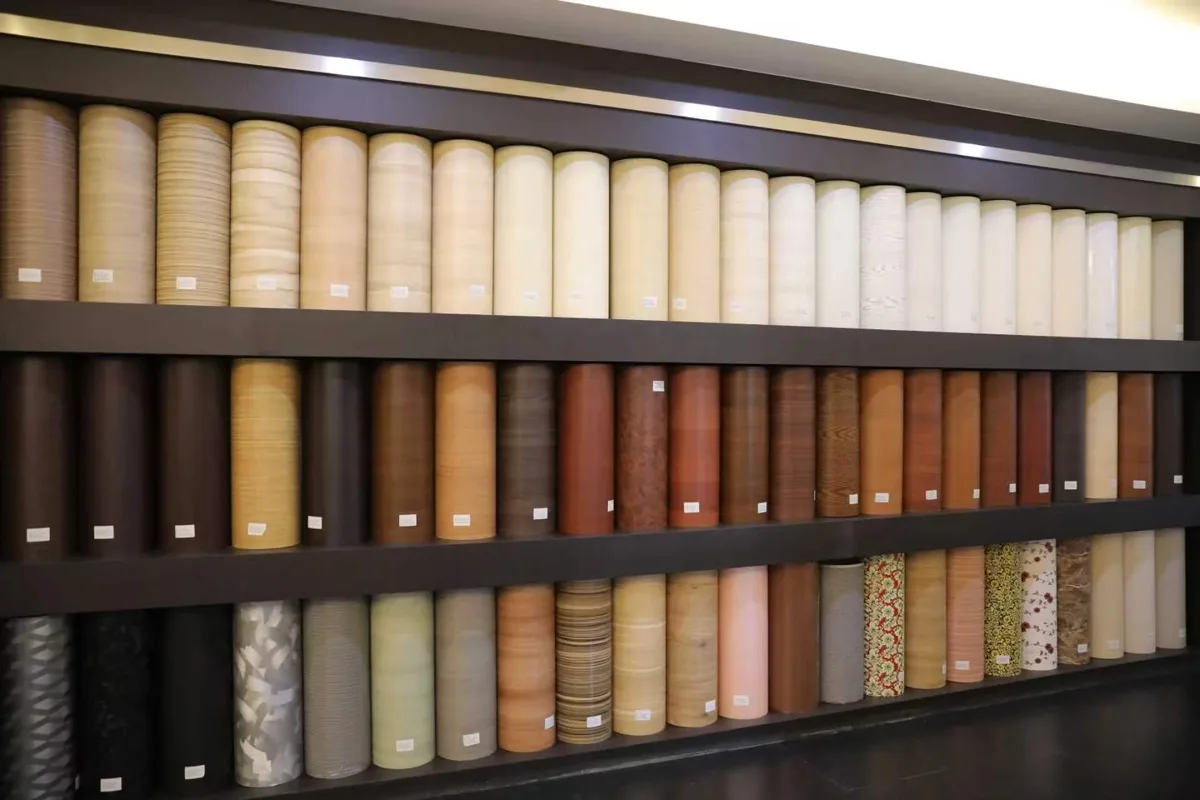
Available in 200+ finishes — natural wood grains, marble and stone textures, matte solid colors, metallic effects and fabric patterns — professional-grade architectural films are designed for interior environments. The technology was originally developed for commercial and architectural applications: hotel lobbies, retail stores, office interiors. It is now widely used for residential renovations, vacation rentals, hospitality upgrades and marine interiors worldwide.
The critical distinction from standard decorative vinyl or 'contact paper' is the material specification. Professional architectural film uses Polymeric PVC (not lower-grade calendered PVC), pressure-sensitive adhesive with air release channels for bubble-free application, and surface coatings that provide genuine scratch, stain and UV resistance. The deep embossed textures are physically pressed into the film — not printed — which means they retain their tactile authenticity over years of use.
What Surfaces Can Be Wrapped?
Virtually any smooth, clean, non-porous surface is suitable for architectural film. In Hawaii, the most common applications include:
Residential
- Kitchen cabinet doors, drawer fronts, side panels, and frames
- Kitchen backsplashes as a seamless, waterproof, grease-resistant alternative to tile
- Bathroom vanity cabinets and shower panels
- Interior doors, window sills, and window frames
- Accent walls and feature panels
- Furniture such as wardrobes, desks, dining tables, shelving units, and dressers
- Stair systems, including risers, treads, and side panels
- Baseboards and decorative beams
Commercial and Hospitality
- Hotel guest room cabinets and furniture
- Lobby reception desks and feature walls
- Cafe and restaurant counters and bar fronts
- Retail display fixtures and shelving
- Elevator cab interiors
- Office reception areas and storage
Marine
- Yacht and boat interior wood panels with a corrosion-proof film specification
- Galley cabinetry and navigation station surfaces
- Berth panels and cabin interior features
How Does Architectural Film Perform in Hawaii's Climate?
This is the most important question for Hawaii property owners, and the answer depends significantly on the quality of film used.
Hawaii presents four specific environmental challenges that matter for interior surface materials:
High UV Exposure
Hawaii receives some of the most intense year-round UV radiation in the United States. Standard printed vinyl films fade, yellow, and become brittle within 2-4 years under direct sun. Quality architectural film includes a UV stabilizer package in the polymer base that prevents yellowing and color degradation for 5+ years of direct sun exposure. Our UV-Resistant series is the specification we recommend as standard for Hawaii installations.
Tropical Humidity
Hawaii's average relative humidity of 63-70% creates conditions that cause paint to peel, wood to swell, and mold to colonize organic surfaces. Quality architectural film is fully waterproof, physically sealing the substrate beneath it. More importantly, the film is non-porous and inorganic, so mold has no organic surface to colonize and no pathway to reach the wood underneath.
Salt Air Corrosion
Oahu's coastal location means that even inland properties experience some degree of salt-air exposure. Salt accelerates the degradation of wood finishes, metal hardware, and adhesive bonds. Our film uses a German-formulated Acrylic PSA adhesive that is specifically resistant to salt-spray exposure, so the bond does not delaminate in coastal conditions.
Fire Safety Compliance
Hawaii's commercial building codes require fire-rated materials in kitchens, hotel rooms, and commercial occupancies. Our architectural film carries a B1 fire classification, equivalent to US Class A in applicable tests, meaning it is self-extinguishing within seconds of removing the flame source. This makes it compliant for commercial kitchen use and hotel installations where standard decorative vinyl would not be approved.
How Much Does Architectural Film Wrapping Cost in Hawaii?
Pricing varies based on surface area, finish selected and the condition of the existing surfaces. The following ranges are typical for Oahu projects:
- Small kitchen cabinet wrap (up to 10 doors): from $200
- Medium kitchen cabinet wrap (10–20 doors): from $500
- Large kitchen cabinet wrap (20+ doors): from $1,000
- Bathroom vanity refresh: from $150
- Feature wall or backsplash: from $100 per panel
- Full bathroom surface wrap: from $600
- Commercial counter wrap: custom quote
- Marine interior wrap: custom quote based on vessel assessment
Compare these divs to the Hawaii alternatives: kitchen cabinet replacement typically runs $8,000–$30,000+ on Oahu. Bathroom retiling averages $4,000–$15,000. Film wrapping delivers the same visual transformation for 60–85% less.
How Long Does Installation Take?
One of the most compelling advantages of architectural film — especially for Airbnb hosts, operating businesses, and families who need to remain in the home — is the installation speed.
- Kitchen cabinet wrap: 1-2 days
- Feature wall or backsplash: A few hours
- Full bathroom refresh: 1 day
- Commercial space (cafe, office, retail): 1-3 days depending on scope
- Yacht cabin interior: 1-2 days
Unlike painting (which requires 24–72 hours of drying and off-gassing time) or tile work (which requires days of grout curing), architectural film is ready to use the moment installation is complete. There is no waiting period, no ventilation requirement and no smell.
How Long Does Architectural Film Last?
Our Pacific brand films are rated for 7–12 years of interior use under standard conditions. In Hawaii's environment:
- Standard Series: 7–10 years in interior applications with limited direct sun
- Scratch-Resistant Series: 8–12 years — the additional PU coating extends surface life significantly
- Scratch + UV Series: 10–12+ years — the UV stabilizer package specifically addresses Hawaii's high solar exposure
With proper care (wiping with a damp cloth, avoiding harsh abrasive cleaners), films consistently reach the upper end of their rated lifespan. Many commercial applications report 10+ years of continuous service life.
Is It the Same as 3M DI-NOC?
3M DI-NOC is the most widely known architectural film brand, and it is an excellent product. However, it is not the only specification that delivers professional-grade results. Hawaii Film & Wrap installs film manufactured to our own Pacific brand specification — using the same Polymeric PVC base material, German-formulated Acrylic PSA adhesive and deep embossed non-printed textures as comparable international brands. We are happy to provide full material specifications and discuss technical comparisons with any client who is evaluating options.
What to Look for in an Architectural Film Provider
- They specialize in architectural (interior) film, not automotive vinyl or general signage
- They can show you completed residential and commercial projects on Oahu
- They provide an itemized written quote that specifies the film grade being used
- They use B1/Class A fire-rated film, which matters for commercial and rental compliance
- They use professional-grade adhesive (solvent-based Acrylic PSA), not water-based adhesive used for craft vinyl
- They have documented Google reviews from Hawaii clients
The 4N Zero-Interference Promise
Hawaii Film & Wrap installs all projects to the 4N standard: No Smell (zero VOC — reoccupy the same day), No Dust (dry process only — no grinding or sanding), No Wait (immediately usable), No Noise (no power tools — no drills, saws or grinders). You live, work and host normally while we transform your space.
Who Is Architectural Film Wrapping For?
Based on our work across Oahu, architectural film wrapping delivers the best value for:
- Hawaii homeowners refreshing a kitchen or bathroom before selling or simply to enjoy
- Airbnb and VRBO hosts who need a fast, high-impact refresh between guest bookings
- Boutique hotel operators upgrading guest rooms during low season without closure
- Small business owners — cafés, shops, offices — who need a fresh interior without shutting down
- Yacht owners protecting marine interior panels from Hawaii's salt air and humidity
Ready to Refresh Your Space?
Talk Through Your Project With Hawaii Film & Wrap.
We serve all of Oahu with fast quote turnaround for kitchens, rentals, commercial spaces, and marine interiors.